
Video · Organizational capability
The Workweek Was Designed for a Factory
Adding intelligence to work without redesigning work preserves the constraints of the old system.
Edited transcript
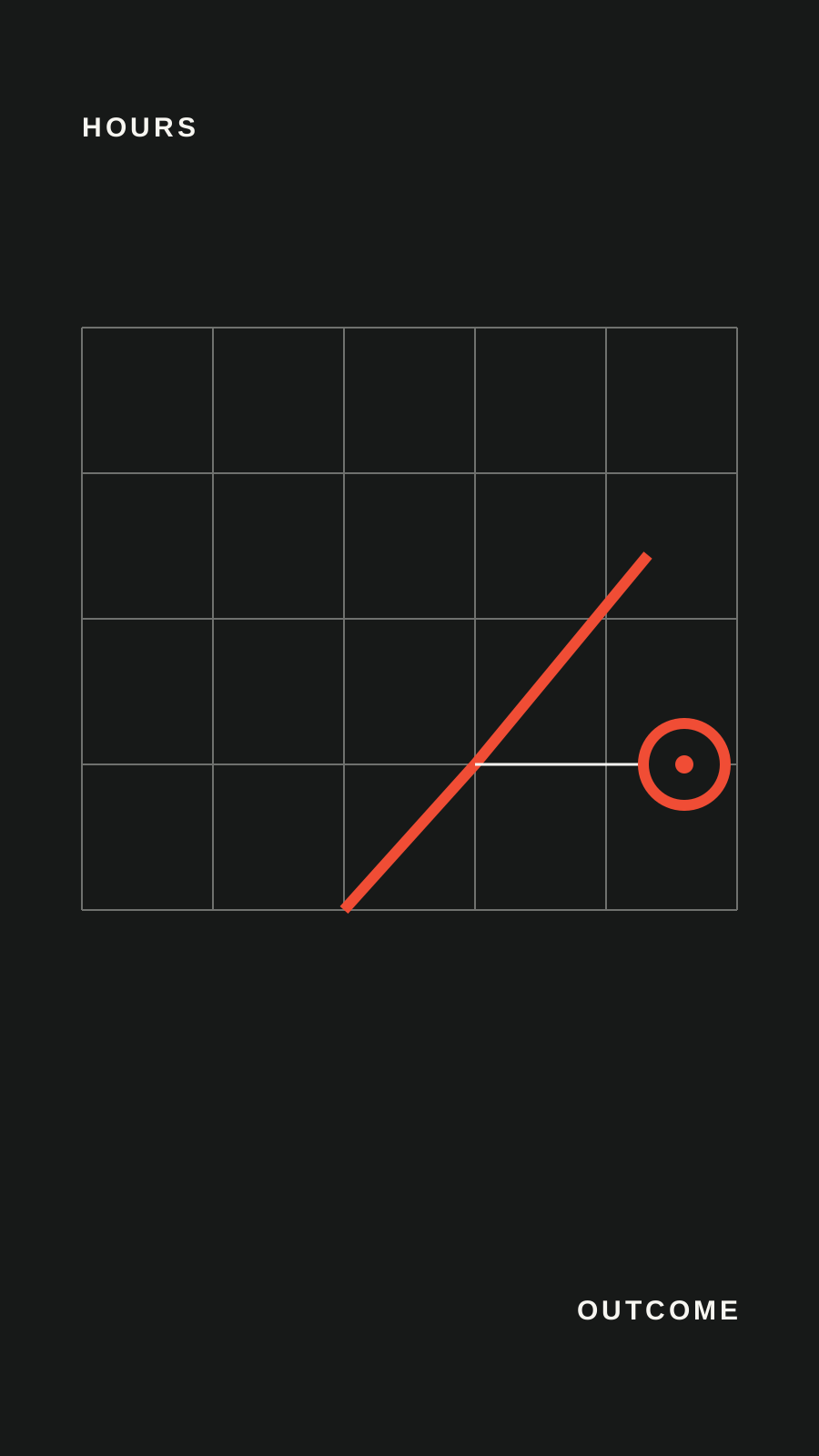
The modern workweek was designed around the factory: fixed time, standardized tasks and management through visible activity. Knowledge work inherited that architecture even when the work stopped behaving like a production line. Now AI is exposing the mismatch. If a tool removes hours from a task but the surrounding approvals, meetings and hand-offs remain, the organization captures very little of the gain. The opportunity is not to compress the same week. It is to redesign work around the outcome, the judgment required and the learning that should remain after the task is complete. Intelligence changes the economics of production. Organizations still have to change the architecture of work.
Implication
Adding intelligence to work without redesigning work preserves the constraints of the old system.
Receive the next argument.
Essays and field notes for leaders building through the machine age.